
Accessible pipe repair, $200–$500
A burst you can point at, exposed pipe in a garden, garage or accessible wall, cut out and repaired in business hours.
First we stop the water. Then we find the actual split, not just where the water shows up, which is rarely the same place, and repair it properly. On call around the clock across Rose Bay and the Eastern Suburbs.
The pipe generations tell the story. Rose Bay’s older housing carries mid-century copper that pinholes from the inside as decades of water chemistry thin the wall; galvanised steel that rusts at every thread until a fitting surrenders; and somewhere in most renovated homes, a junction where three eras of pipework meet, original metal, nineties plastics, modern PEX, each joint a small bet that has to keep paying off. High mains pressure across parts of the Eastern Suburbs collects on those bets eventually.
What makes bursts genuinely tricky is that water lies about its address. It tracks along pipe exteriors, rides joists and wall plates, and surfaces downhill: a stain in the lounge from a split above the laundry. Open the ceiling at the stain and you find wet plaster and no pipe. So we do not guess: the line gets traced back to the actual failure, the failed section comes out, and the repair is pressure-tested against the mains before a single sheet of plaster goes back.


Foreshore blocks of flats share drainage, so a single blockage affects several units. A camera and the right access sort it fast.
In an apartment you generally cannot use the street meter, that serves the whole building. What you need is your lot's own isolation valve, usually in the laundry, a hallway cupboard, or a riser cupboard on your floor.
Find it on a calm evening and make sure it turns. A valve that has not moved in fifteen years sometimes will not, and discovering that at midnight with water running is a much worse time to learn it.
Sloping streets running down to the foreshore funnel stormwater fast, and blocked pits back up in heavy rain. We clear them and keep them flowing.
Mains pressure varies with elevation, and properties low on a slope frequently sit at the high end of the range. Higher standing pressure shortens the life of every fitting in the house, particularly flexible hoses under sinks and behind toilets.
If you are at the bottom of a hill and you have had more than one fitting let go, a pressure test is worth doing. A pressure-limiting valve is a small part that prevents an expensive category of failure.
Many grand older homes still run on original clay and earthenware drains prone to cracks and sags. CCTV shows us exactly what’s happening.
Not every escape of water is a burst pressure pipe. A cracked or collapsed drain leaks too, slowly, without a pressure drop, and often for months before anything shows.
The distinction matters because the repairs are different jobs at different prices. A pressure leak shows on the meter with every tap closed; a drain fault does not, and it is found with a camera rather than a listening device.
Water appearing through your ceiling is one of the few plumbing situations where the fault is definitely not yours and the damage definitely is.
Get the water isolated upstairs if anyone is home, photograph everything before it is touched, and notify the building manager in writing the same night. Our report names the source lot and the line, which is what your insurer and the owners corporation both need before anybody pays for anything.
On sloping ground water leaves a failed pipe and travels, following the easiest path under the surface until something stops it. It can emerge metres downhill, in a neighbour's yard, or against a retaining wall.
Rose Bay is a prized harbourside suburb (postcode 2029) hugging the Sydney Harbour foreshore, bordering Vaucluse, Dover Heights and Bellevue Hill. With grand homes, waterfront blocks and leafy streets, blocked drains come with the territory, and we know Rose Bay’s pipes well.
So digging where the water appears is usually digging in the wrong place. Correlation and acoustic equipment work uphill from the symptom, which on a steep block routinely saves several metres of unnecessary excavation.
That bang when a tap or washing machine valve shuts is a pressure wave hitting a dead end. It stresses every joint in the system, and over years it is a genuine cause of premature failure rather than merely an annoyance.
It is usually fixable cheaply, arrestors, a pressure-limiting valve, or simply re-securing pipework that has come loose. If your house bangs, it is worth mentioning while we are there for something else.
Water off at the meter. If it has reached outlets, appliances or a switchboard, kill that circuit before going near it. Move what you can lift, and put a bucket under an active drip rather than a towel.
Then photograph it, the water, the damage, and the time. Two minutes of pictures before anything is cleaned up is worth more to a claim than anything anyone can reconstruct afterwards.
A burst you can point at, exposed pipe in a garden, garage or accessible wall, cut out and repaired in business hours.
Adds careful access and tracing the water back to the real split before repair.
Locating equipment, access through concrete or excavation, or a reroute around the slab. The camera and leak gear keep the hole small.
Nights and weekends run roughly $180–$250/hr against $120–$160 in daylight, plus the call-out. Shutting the meter and waiting for morning is sometimes the smart money, we will say so.
Professional leak detection for the first hour, before anything is opened up. Cheaper than exploratory holes in three walls.
Every repair leaves pressure-tested and carries a lifetime workmanship warranty. Figures here are indicative of the 2026 Sydney market rather than a quote from us, you get your own number as a fixed price before any work starts.
On the phone: meter valve, clockwise, done: the flooding stops before we have left the depot. On site, we isolate just the affected line where possible so the rest of the house stays on.
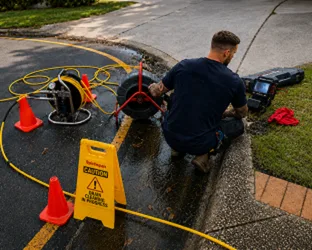
Water surfaces downhill of the failure, so we trace: acoustic gear, thermal imaging or pressure testing for concealed lines, before anything is opened up.

The failed section is cut out and replaced, not bandaged. If what we expose says the whole run is at end of life, you get that assessment straight, with numbers for both paths.

Pressure-tested against the mains before any wall, floor or trench is closed. You see it holding before we leave.
The crisis ended when the meter closed. Call now and the repair gets planned properly, not frantically.
One fixed price, one properly repaired pipe, one pressure test you watch pass. That is the whole offer.

Leave your details and our local Rose Bay team will call you back fast.