
Connector & hose fixes, $100–$200
The brittle flexible connector behind the cooktop, a small part responsible for an outsized share of leaks.
Gas is the one trade where "pretty confident" is not a standard. Leaks found and repaired, cooktops and heaters connected, lines run and certified: all of it by licensed gasfitters, all of it pressure-tested before the gas goes back on in Rose Bay.
In NSW, every job on a gas installation: connecting a cooktop, moving a bayonet, repairing a line: must legally be done by a licensed gasfitter, and for good reason: the failure modes are leaks, fires and carbon monoxide, none of which give second chances. It is also why "the handyman hooked it up" appliances are the single most common source of the leaks we get called to.
Licensed does not just mean allowed. It means the job finishes with a manometer pressure test proving the whole installation holds, appliances checked for correct operation and ventilation, and work done to AS/NZS 5601, the standard that decides what your insurer thinks of the installation if anything ever goes wrong. Across Rose Bay and the Eastern Suburbs, that is the finish line on every gas job we do.


Meters and regulators on the weather side of a property near the water take the worst of it, and a corroded regulator is both a supply problem and a safety one.
Every job finishes on a pressure test with a certificate. Gas has no visible half-finished state: an installation either holds and is certified, or it is not complete.
Relocating or shielding a badly exposed meter assembly is straightforward work that is rarely done until something fails. If yours is green, crusted or streaked with rust, it is worth raising.
Putting a gas cooktop where there was not one, or moving an appliance during a renovation, is rarely just plumbing in a block. It usually requires an owners corporation approval, sometimes a by-law, and always correct ventilation and flueing for the space.
Sizing is the quiet failure. Adding an appliance to a line that was adequate for the original load can starve everything else on it, so we check what the existing run can actually carry before extending it.
We will tell you what the work needs before you go to the committee, so the application you submit is the one that gets approved rather than the one that comes back with questions.
With 68.8% of Rose Bay dwellings recorded as flats or apartments by the ABS 2021 Census, most gas here is a cooktop, a balcony connection or a service running through common property rather than a full house installation.
Pool heaters, outdoor fires and alfresco appliances are common on waterfront properties, and they are the largest gas loads most homes ever add. A pool heater alone can exceed the rest of the house combined.
So the first question is never the appliance, it is whether the meter and the run can carry it. That gets established before anything is ordered, because the alternative is an expensive heater that never reaches temperature.
The procedure does not change because you have neighbours, but the urgency does, a leak in a shared building affects everyone on that riser.
Leave, take others with you, and call 131 909 from outside. Then notify the building manager. Do not attempt to isolate anything in a common meter room yourself; the network operator attends around the clock and that is what they are for.
Rose Bay is a prized harbourside suburb (postcode 2029) hugging the Sydney Harbour foreshore, bordering Vaucluse, Dover Heights and Bellevue Hill. With grand homes, waterfront blocks and leafy streets, blocked drains come with the territory, and we know Rose Bay’s pipes well.
Homes near the water are often closed up tighter against wind and weather than their inland equivalents, and modern draught-proofing has made that more pronounced. Gas appliances need air, and a well-sealed room changes the ventilation calculation.
It matters most for older heaters and anything unflued. If a room with a gas appliance has been renovated to be more airtight, the appliance should be re-assessed for that room rather than assumed still suitable.
The brittle flexible connector behind the cooktop, a small part responsible for an outsized share of leaks.
Leaking threads and valves sealed properly and proven again under pressure.
Corroded or damaged sections replaced; concealed lines needing access run $800–$2,500.
Connected, tested, certified. Extending a line or adding a bayonet to reach it is quoted on top, fixed, first.
Sydney's 2026 licensed-gasfitter range, call-outs typically $80–$150. The certificate at the end costs nothing extra, it is the job.
The receipt that matters is not paper: it is the needle on the manometer refusing to drop. Figures here are indicative of the 2026 Sydney market rather than a quote from us, you get your own number as a fixed price before any work starts.
Suspected leaks start with the supply off at the meter and air moving through the space. Diagnosis begins only after the installation stops feeding the problem.
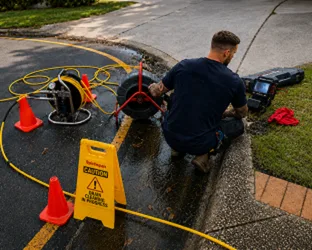
A manometer says whether the system is losing gas; detection fluid and instruments then walk the installation to the guilty joint, fitting or run.

The failed component comes out and compliant material goes in, to AS/NZS 5601, whether that is one connector or metres of rerun line.
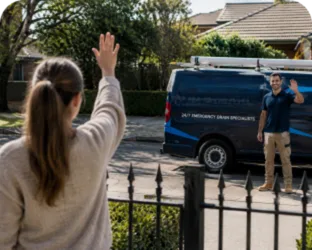
The full installation holds on the gauge or we are not done. Appliances relit, flames checked blue, ventilation confirmed, compliance documented.
Cooktop, heater or barbecue point: connected, tested and certified in one visit. The right way costs less than the redo.
Licensed gasfitters, every job pressure-tested and certified. Smell gas right now? 131 909 first, then us.

Leave your details and our local Rose Bay team will call you back fast.