Skip to content
Blocked Drains

Grease trap overflowing or smelling: what it means and who fixes it

A failing grease trap shows up as a smell, slow floor wastes or water in the kitchen. Here is what each sign means, and who to call.

Chris Provenzale

Chris Provenzale

Vaucluse Blocked Drains · · 6 min read

Jump to a section 10
  1. What does a grease trap actually do?
  2. Does your business have to have one?
  3. How can you tell a grease trap is failing?
  4. A smell that returns quickly
  5. Slow drains and gurgling in the kitchen
  6. Water or grease coming up at the trap or a floor waste
  7. Holes, leaks or a lid that no longer seals
  8. Who do you call: the pump-out contractor or a plumber?
  9. What keeps a trap working between services
  10. When it stops being a job for the kitchen

The short answer

A grease trap is a tank on a commercial kitchen's drain that holds back fat, oil and food solids so they do not reach the sewer. In Sydney, a business that cooks or serves hot food must have one. When it fails, the cause is usually a trap overdue for pumping out, a blocked pipe between the kitchen and the trap, or a worn-out tank. Pumping out is done by an authorised Wastesafe transporter. Blocked lines, leaks and repairs are a licensed plumber's job.

What you'll learn

  • What a grease trap does, and what Sydney Water requires of a food business
  • The signs that a trap is failing, and what each one usually means
  • Who empties a trap and who repairs one, which are not the same people
  • What not to put in a trap, and why enzymes and degreasers make it worse

The first sign is rarely the trap itself. It is the floor waste by the dishwasher that drains slowly, the pre-rinse sink that gurgles, or a smell at the back of the kitchen that gets worse when the lunch rush ends. By the time grease is visible on the floor, the trap has been struggling for weeks.

This guide is for the trap that is failing, not the one you are thinking of buying. It covers what the trap is doing, what Sydney Water expects of a food business, how to read the warning signs, and the point where the job stops being for the kitchen and starts being for a licensed plumber. It is one part of a bigger question, working out which pipe is yours and who has to fix it, and a grease trap is a clear example of an owner-side problem.

What does a grease trap actually do?

It buys time. Kitchen wastewater arrives hot and full of fat. In the trap it slows down and cools, and fats, oils and grease float to the top, heavy food solids settle to the bottom, and the relatively clear water in between carries on through the outlet to the sewer. Sydney Water's own guide describes the same job: helping to stop food scraps and greasy waste from entering its wastewater system, so they do not block your plumbing or the public network.

That only works if the trap has room to hold what it catches and the water has time to cool. A full trap or a hot, fast flow lets fat straight through, and it ends up in your own pipes first, then Sydney Water's.
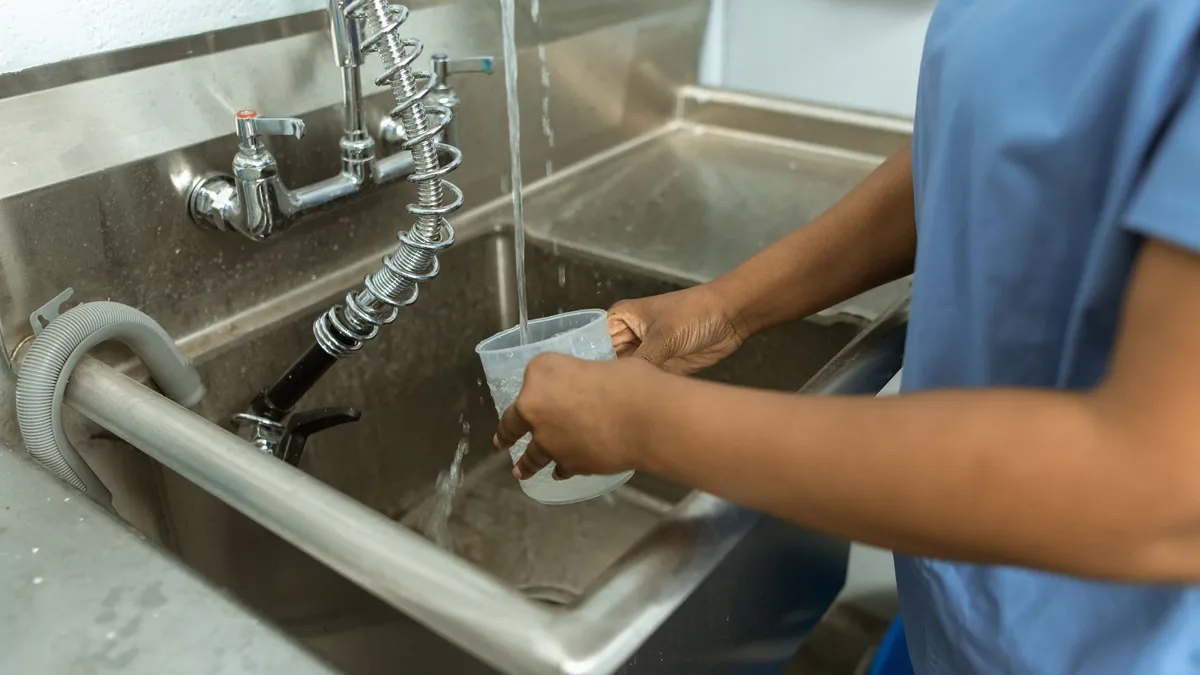
A person washing a utensil in a stainless steel sink in a professional kitchen
Everything that goes down a commercial kitchen sink, floor waste and dishwasher is meant to end up in the trap before it reaches the sewer.

Does your business have to have one?

If you cook or serve hot food in Sydney, yes. Sydney Water says it plainly: you must have a grease trap, and it only allows authorised traps from the list on its website. Most food businesses also need in-sink bucket traps in prep sinks and in-floor bucket traps in floor wastes in the kitchen and food preparation areas.

Rose Bay has cafes, restaurants and takeaways as well as homes, so this lands on a real mix of owners. Whichever you are, the rule that matters is the same. Sydney Water's requirements are confirmed when you apply to discharge trade wastewater through its Tap in service, before you install or change any equipment. The trap is not a fitting you choose from a shop and have a plumber drop in.

How can you tell a grease trap is failing?

A trap fails in one of a few ways, and each has a different signature. These are the ones we are asked about, and what each usually points to.

A smell that returns quickly

A sour, rancid smell from the trap or nearby floor wastes usually means the trap is full or overdue. Sydney Water links servicing to reducing odours, and says a trap has to be vented so the wastewater cools and the fat can separate. If the smell comes back within days of a pump out, the trap may not be the whole story. Fat can build up in the pipes feeding it and rot there.

Slow drains and gurgling in the kitchen

If sinks and floor wastes drain slowly or gurgle, the blockage is either the trap, which is full, or the pipe run into or out of it. Sydney Water warns that long pipe runs can become clogged with grease and cause wastewater to overflow inside your property, and the same goes for a pumped system if the pump fails.

Water or grease coming up at the trap or a floor waste

This is the one that cannot wait. Stop sending water to the trap: no dishwasher, no pre-rinse, no mopping into the floor waste. It is the same rule as any blocked line, and it keeps a spill small while someone gets there.

Holes, leaks or a lid that no longer seals

Sydney Water's advice here is specific: if your trap becomes harder to clean, has holes in it or starts to leak, ask a licensed plumber or the manufacturer for advice. It adds that grease traps have a long lifespan but they do wear out, and that a trap which has held grease for many years can be difficult to repair. Whether to repair or replace is a real decision, and replacing means applying through Tap in to vary your agreement before the work starts.

Who do you call: the pump-out contractor or a plumber?

They are different jobs, and calling the wrong one first costs a day.

  • The authorised Wastesafe transporter pumps out the trap, cleans and scrapes its internal surfaces and records the clean with Sydney Water. If the trap is simply full, this is the call, and a plumber cannot do it for you.
  • A licensed plumber deals with everything else: a blockage in the pipes before or after the trap, a leak, holes, a damaged lid or baffle, a trap that keeps filling faster than it should, and installing or replacing the trap and issuing the certificate of compliance. We clear and camera-inspect those lines.

A useful rule: if the trap was pumped recently and the problem is still there, it is a plumbing problem, and pumping it again will not fix it. A camera down the line shows whether grease has narrowed the pipe, a joint has failed, or roots or something else is in the way.

What keeps a trap working between services

  • Scrape plates and pans into the bin before washing, so solids do not reach the trap.
  • Never pour waste oil into a sink or the trap. Sydney Water says to put it in a container and send it off site for recycling.
  • Use as little detergent as you can, as it carries fat through the trap.
  • Keep the trap vented, and keep clear access above it. Sydney Water asks for space above the trap at least equal to its depth, so the lid can be opened and the tanker can reach it.
  • Keep other waste, such as from peeling machines, out of the trap. It is for fats, oils and grease only.
  • Do not connect food waste disposal units or garbage grinders to the drain. Sydney Water does not allow them in business premises.

When it stops being a job for the kitchen

Treat any of these as a plumber's call, today rather than next week: water or grease coming up inside the kitchen, a trap that overflows soon after a pump out, a visible leak, damage to the tank or lid, or drains that stay slow after the trap has been serviced. They mean the fault is in the plumbing, not in how full the trap is.

If you are not sure which side of the line you are on, our emergency plumber line answers 24 hours, and we will tell you on the phone whether it is a plumber you need or your waste contractor first. For anything that is not urgent, send us the details.

The short version

A grease trap holds fat, oil and grease back from the sewer by slowing and cooling kitchen wastewater so the fat floats and the solids sink. Sydney Water requires one for any business that cooks or serves hot food, and sets how often it is pumped out in your connection agreement. Pumping and cleaning is done by an authorised Wastesafe transporter, not by staff and not by a plumber. A plumber is who you call when the trap is leaking, has holes, is getting harder to clean, or when the pipes into or out of it are blocked. Do not add solvents, enzymes, bacteria or odour agents, and use as little detergent as you can. If the kitchen is backing up now, stop sending water to it and get the right person on site the same day.

Call 1300 585 048

Common questions

What is the purpose of a grease trap?

To stop fats, oils, grease and food solids from reaching the public sewer, where they cause blockages and overflows. Wastewater from the kitchen slows down and cools inside the trap, the fat floats to the top, the solids sink to the bottom, and the water in the middle carries on to the sewer. Sydney Water says properly installed and maintained pre-treatment equipment helps stop food scraps and greasy waste entering its wastewater system.

What is the main difference between a grease trap and a septic tank?

A grease trap is a small pre-treatment step on a kitchen drain that is still connected to the sewer. It only separates fat and solids, and it has to be emptied regularly. A septic tank is a household sewage treatment system for a property with no sewer connection, and it takes everything from the toilets as well. Rose Bay is on the sewer, so the grease trap is the one you are likely to meet, and it belongs to a food business, not a home.

Does a commercial kitchen require a grease trap?

In Sydney, yes. Sydney Water's requirement is plain: if you cook or serve hot food, you must have a grease trap, and it has to be one of the authorised traps on its list. Most food businesses also need bucket traps in prep sinks and floor wastes. Apply for approval to discharge trade wastewater through Sydney Water Tap in before you buy or install anything, because Sydney Water says it can be an expensive mistake to install equipment before checking with it.

How does a grease trap get emptied?

By a vacuum tanker. An authorised Wastesafe transporter pumps out the wastewater, cleans and scrapes the internal surfaces of the trap, and scans a barcode that tells Sydney Water the site has been cleaned. In a multi-storey building there can be a fixed pump out line from street level so the tanker hose can reach the trap.

Can I empty my own grease trap?

No. Sydney Water says you must use an authorised Wastesafe transporter to service the trap, which lets it track the collection, transport and disposal of grease trap waste and prevent illegal dumping. Scooping it out yourself and putting the waste in the bin or the drain is the thing the system is designed to stop.

Do plumbers empty grease traps?

Not as a rule. Emptying is done by an authorised Wastesafe transporter. A licensed plumber installs the trap and issues the certificate of compliance, repairs it, and clears the pipework into and out of it. Sydney Water also tells operators to ask a licensed plumber or the manufacturer for advice if a trap becomes harder to clean, has holes or starts to leak.

How much does it cost to have a grease trap cleaned out?

There is no honest single figure, and we are not going to quote one. Your Wastesafe transporter charges you directly for cleaning the trap and for removing, transporting and treating the waste, and Sydney Water adds its own management fee. The price depends on the size of the trap, how much waste it holds and how often it is serviced. Ask two transporters for a written quote that says what is included.

How often do grease traps need to be emptied?

As often as your Sydney Water connection agreement says. Sydney Water states that the agreement specifies how often the trap must be pumped out, and that the interval depends on the size of the trap, how much waste the business produces and the quality of the greasy wastewater. If your trap is smelling or backing up between services, the interval is not enough for how you cook now, and that is worth raising with Sydney Water through Tap in.

What dissolves grease in a grease trap?

Nothing you should add. Sydney Water's rule is not to add solvents, enzymes, mutant or natural bacteria, odour control agents or pesticides to a grease trap, and says it is not permitted under your agreement. Detergent is part of the problem as well, because it breaks fats and oils down so they pass through the trap and into the sewer. The fix for a full trap is a pump out, not a chemical.

Why does my grease trap smell?

Most often because it is full or overdue, or because it is not venting properly. Sydney Water says a trap needs to be vented so the wastewater can cool and the fat can separate, and that servicing reduces odours. A smell that returns within days of a pump out points away from the trap and towards the pipes feeding it, which is where a camera inspection helps.

Share:

Summarise this article with:

Chris Provenzale with his family

Chris Provenzale, Vaucluse Blocked Drains

Chris worked as a plumber before stepping back to run the business. He now leads the licensed team behind Vaucluse Blocked Drains, on the view that most people are told to replace things they could have repaired.

More about the team
Call Now